
Guides
What inspectors check at a new property management business
A new property management business is inspected on premises and safety, staff and payroll, insurance, records, and fair housing and screening.
What to take away
- The paperwork that sinks a new company is rarely the lease. It is the rental registration nobody filed, the detector rule nobody wrote into the move-in sheet, and the key log nobody keeps.
- Every item below is a premises, safety, staff or records decision. Each one names the body that sets the rule, because the rule differs by state, county and city.
- Nothing here is a legal opinion. Confirm licensing, tenancy, tax and building questions with your state board, a licensed paralegal or lawyer, and the authority having jurisdiction.
- The items that cause trouble later are the ones nobody owns. Give every box a name and a date before opening day.
Small size changes the arithmetic, not the duties. A new property management business files the same rental registration, gives the same detector and lead disclosures, applies the same screening standard and keeps the same trust records whether it manages ten doors or a thousand. What shrinks is the staff: the whole list lands on one or two desks, and an item nobody owns is an item that gets skipped.
The four areas inspectors and auditors actually open
In practice, the same few visitors show up. Your city or county housing or code office inspects a registered rental. The fire marshal inspects the building under the fire code your city has adopted. If any unit takes a Section 8 voucher, HUD inspects it against NSPIRE, the standard that replaced the old Housing Quality Standards. A workers' compensation carrier audits payroll and certificates. Each one pulls from the same four piles. Get them right once and the visits get short.
The fire marshal works from the edition your city adopted, usually a version of the International Fire Code or NFPA 1, and the sheet is consistent from one city to the next: serviced extinguishers, exit signs and emergency lighting, clear egress, and nothing stored in the stairwells. NSPIRE organizes its standards by inspectable area — the unit, the inside of the building and the outside — and its inspectable items are the physical things a tenant lives with: smoke and carbon monoxide alarms, handrails, electrical hazards, water leaks and heat.
Four areas and who opens them
Premises and safety
- Who asks
- City code office
- Opened first
- Registration certificate
- Also opened
- Detector records
- Also opened
- Lead-paint records
Staff and payroll
- Who asks
- State labor agency
- Opened first
- Classification tests
- Also opened
- Timekeeping
- Also opened
- Training records
Insurance
- Who asks
- Broker and lender
- Opened first
- Certificate of insurance
- Also opened
- Additional-insured endorsements
- Also opened
- Broker confirmation
Records
- Who asks
- Licensing board
- Opened first
- Retention schedule
- Also opened
- Trust reconciliations
- Also opened
- Screening decisions
Four areas inspectors open
| Area | Who asks for it | What they open first |
|---|---|---|
| Premises and safety | City code or housing office, state accessibility code | Registration certificate, detector and lead-paint records |
| Staff and payroll | State labor agency, workers' compensation carrier | Classification tests, timekeeping, training records |
| Insurance | Broker, owner, lender | Certificate of insurance, additional-insured endorsements |
| Records | Licensing board, court, tax authority | Retention schedule, trust reconciliations |
Premises and safety
Start with the office itself. The leasing office is a place of public accommodation, so the entrance, the route through it and the service counter have to work for a wheelchair user.
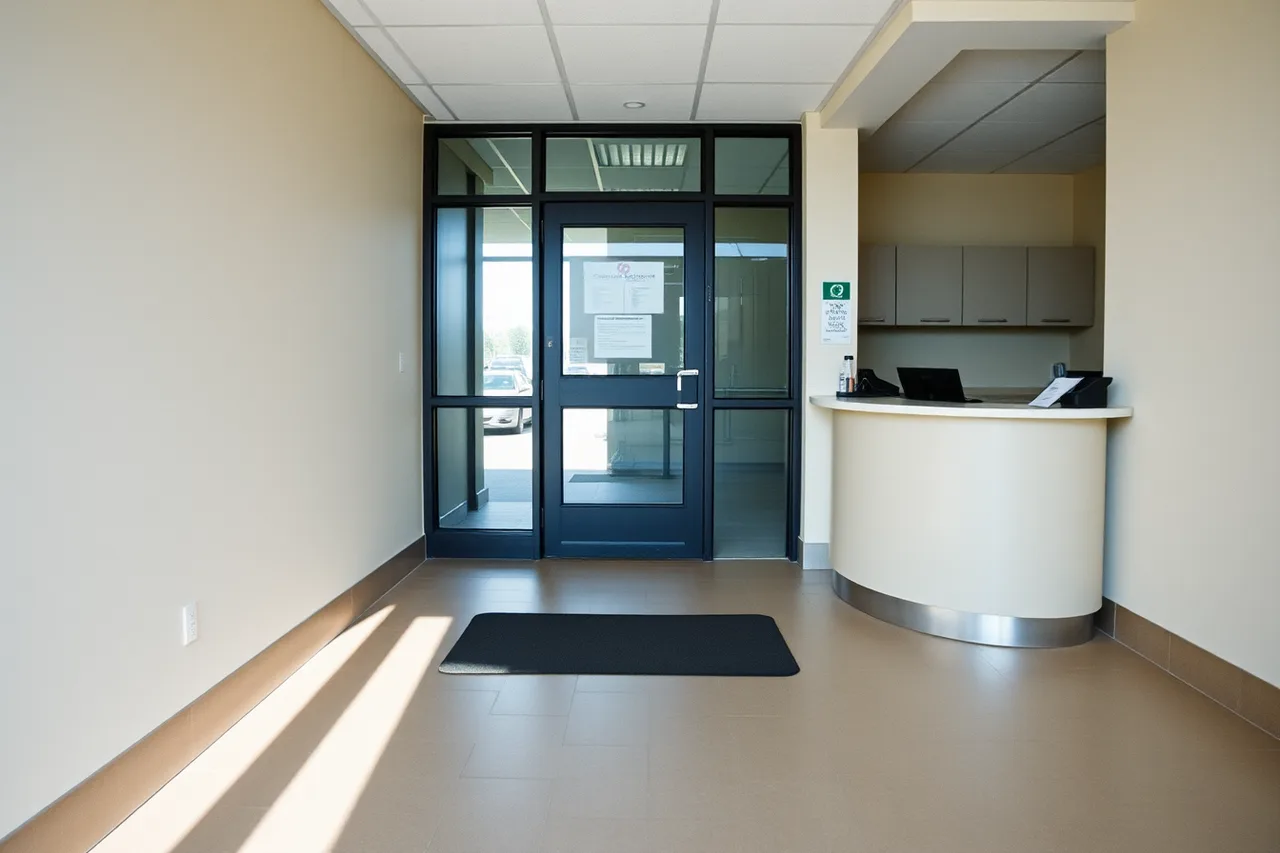
The Justice Department's ADA small-business guide walks through those three elements in plain terms. Check them against your state accessibility code as well, since states add requirements. Fixing this at office selection costs a fraction of fixing it after the signage is up.
Then the units. Many cities require a rental registration or certificate before a unit can be lawfully rented, and some tie it to a periodic inspection. What the city calls it varies — rental registration, rental certificate of occupancy, rental housing license — and so does the cycle. Ask the city housing or code office which applies, and put the renewal date in the same calendar as the licenses.
Detector rules, lead-paint disclosure for pre-1978 housing, and habitability standards come from the local housing or code office and from the Environmental Protection Agency and your state. On detectors, the model codes inspectors work from ask for smoke alarms in each sleeping room and outside each sleeping area, and for carbon monoxide alarms near the sleeping areas wherever there is a fuel-burning appliance or an attached garage; your state's version may add more. The federal lead rule is specific: give every tenant the EPA pamphlet Protect Your Family from Lead in Your Home, have the tenant sign the disclosure and acknowledgment of receipt, and keep that signed form for three years. That rule is the EPA and HUD lead disclosure rule at 40 CFR Part 745, Subpart F, and the signed page is the Disclosure of Information on Lead-Based Paint and/or Lead-Based Paint Hazards. Write each rule into the move-in procedure so the form proves it happened.
What the inspection itself turns on is short and physical: working smoke and carbon monoxide alarms, GFCI outlets in kitchens, baths and laundry areas, a fire extinguisher with a current service tag, a clear path out of every unit and clear common-area egress, sound handrails and guardrails on every stair, labeled and reachable utility shutoffs, no exposed wiring and no extension cords used as permanent wiring, and dry, mold-free surfaces with heat, plumbing and hot water in service. Walk that list on your own units before anyone else does, photograph what you find, and keep the paper that goes with the hardware — extinguisher service tags, alarm test logs and any sprinkler inspection certificate — because that stack is the first thing the fire marshal asks for.
For staff hazards, OSHA's safety and health program, grounded in the general duty clause of the Occupational Safety and Health Act, gives a structure you can fill with the risks your crew actually meets:
- ladders
- roofs
- mechanical rooms
- entering an occupied unit alone
- locking out equipment during repair
Key control is the last premises item and the one most often skipped. Decide who holds keys, how each handoff is logged, and what happens the day one goes missing.
Staff classification and payroll
A property manager who also shows units, answers the after-hours line and handles maintenance requests is probably an employee, not a contractor. The tests that decide that question do not agree: the IRS applies its common-law control factors, the Department of Labor applies an economic-realities test, and a number of states apply their own, such as the ABC test. State labor agencies publish the tests, and they differ from the federal ones.
On-call and resident staff are the trap. Time spent waiting to be called can be compensable, and a rent discount given in exchange for being available may count as wages. Read your state labor agency's guidance on compensable time before you write the offer.
Before the first shift: payroll registered for withholding, workers' compensation in force, and timekeeping running. If you are still deciding which license the company and the responsible broker need, the licensing guide sets out what the state real estate commission asks, from the responsible-broker requirement to the trust-account rules; put the answers in writing before the first listing.
The workers' compensation carrier audits the year's payroll. What it opens are the payroll registers, the classification codes it assigned to each employee, certificates of insurance from any subcontractor, timekeeping records, and job descriptions that support how each person was classified. Keep them together as the year runs; a premium audit that cannot find them ends in an estimated premium.
Insurance
Bind coverage before the first key changes hands. General liability, errors and omissions, and workers' compensation answer different claims, and owners and lenders will ask to be named as additional insured.
The insurance coverage guide lists what each policy answers for and what to put to your broker. Ask the broker to confirm in writing which policy responds when a tenant's belongings are damaged during a repair you arranged.
Records retention
Set the retention schedule before you have records to keep. Three clocks run at once: the licensing board's rule for trust and transaction records, your state's statute of limitations on lease claims, and the IRS's three-year window to assess the returns you file.
Keep trust reconciliations, management agreements, leases, inspection forms with photos, screening decisions and training records on the longest applicable clock. Store screening decisions separately from the tenant file, since fair-housing complaints turn on what you kept and who could see it.
Fair housing and screening
One written screening standard, applied identically to every applicant, covering income, credit, rental history and criminal history. Check it against the Fair Housing Act and HUD's fair-housing rights and obligations, and against your state or city fair-housing agency, which may add protected classes and restrict how criminal or credit history is used.
Write the reasonable-accommodation and reasonable-modification procedure down and name the decision-maker. Train everyone who speaks to an applicant, and keep a signed record of that training before the first listing goes live.
The named-owner-and-date system
Build one authority map for the company — city housing or code office, state real estate commission, state labor agency, workers' compensation carrier, Environmental Protection Agency, HUD — and keep the licensing and compliance guide beside it. Every row needs at least one item above with a person's name and a date beside it.
A row with nothing beside it is a rule the company has quietly decided to discover the hard way, usually during an inspection or a deposit dispute.
Common questions
These are the ones that come up in the first month, usually right after the first listing goes live.
Does every city require a rental registration?
No. Some require one per building, some per unit, some only for certain property types, and some have none. The city housing or code office confirms which applies and whether an inspection comes with it.
Can the same person hold keys and reconcile the trust accounts?
They can, but a second person should review the reconciliation. Separation of custody and review is what makes the record credible if a deposit is ever disputed.
How long do we keep inspection photos?
On the longest clock that applies to you: the licensing board rule, the statute of limitations on lease claims, or the tax period. Ask a qualified accountant and your board, then write the longer number into the schedule.