Guides
Winter maintenance administration in the Prairies and Atlantic Canada, a seasonal checklist
Prairie and Atlantic winter maintenance runs on three procedures: snow clearing triggers, heating failure dispatch and freeze-up repair records.
What to take away
- Set the snow clearing trigger from the depth in your contract, not from the city plow schedule. Residential streets are cleared last, so waiting on the city always leaves entrances late.
- Dispatch a heating failure within two hours and deliver portable heaters if the repair runs past four. Record the delivery and any abatement you granted.
- Treat a burst pipe as an emergencyshut the supply, photograph before removal, and start drying within 24 hours.
- Keep one work order per event, with report time, dispatch time, arrival, parts, photos and invoice in the same file.
- Book winter contractors in September. By December the reliable firms in Saskatoon and St. John's are committed.
What Prairie and Atlantic winters demand from maintenance administration
A Prairie cold snap can hold Winnipeg below minus 25 for a week. A St. John's storm can bring rain, ice and snow inside twelve hours. Both produce the same administrative problem: contractors booked out, tenants calling after hours, invoices arriving without matching tickets.
Saskatchewan landlords work under The Residential Tenancies Act, 2006, which sets repair duties and notice expectations, and the Office of Residential Tenancies hears disputes about them. Read housing and renting in Saskatchewan before you rewrite a winter procedure.
Alberta publishes information for landlords and tenants covering maintenance duties and how disputes reach its resolution service. Useful comparison if you manage across provincial lines.
The National Research Council publishes the model building code, which provinces draw on for heating and life safety provisions in rental property.
The model fire code is the second layer. Winter work touches it more often than managers expect: snow-blocked exits, fire separations cracked by a freeze, generator checks during an outage.
Toronto's housing property standards show how a large city writes maintenance duties into bylaw, and the format transfers to a local winter standard.
None of this replaces a written maintenance plan. The plan names who calls the contractor, who approves overtime and who files the record.
Snow clearing schedules and contractor coordination
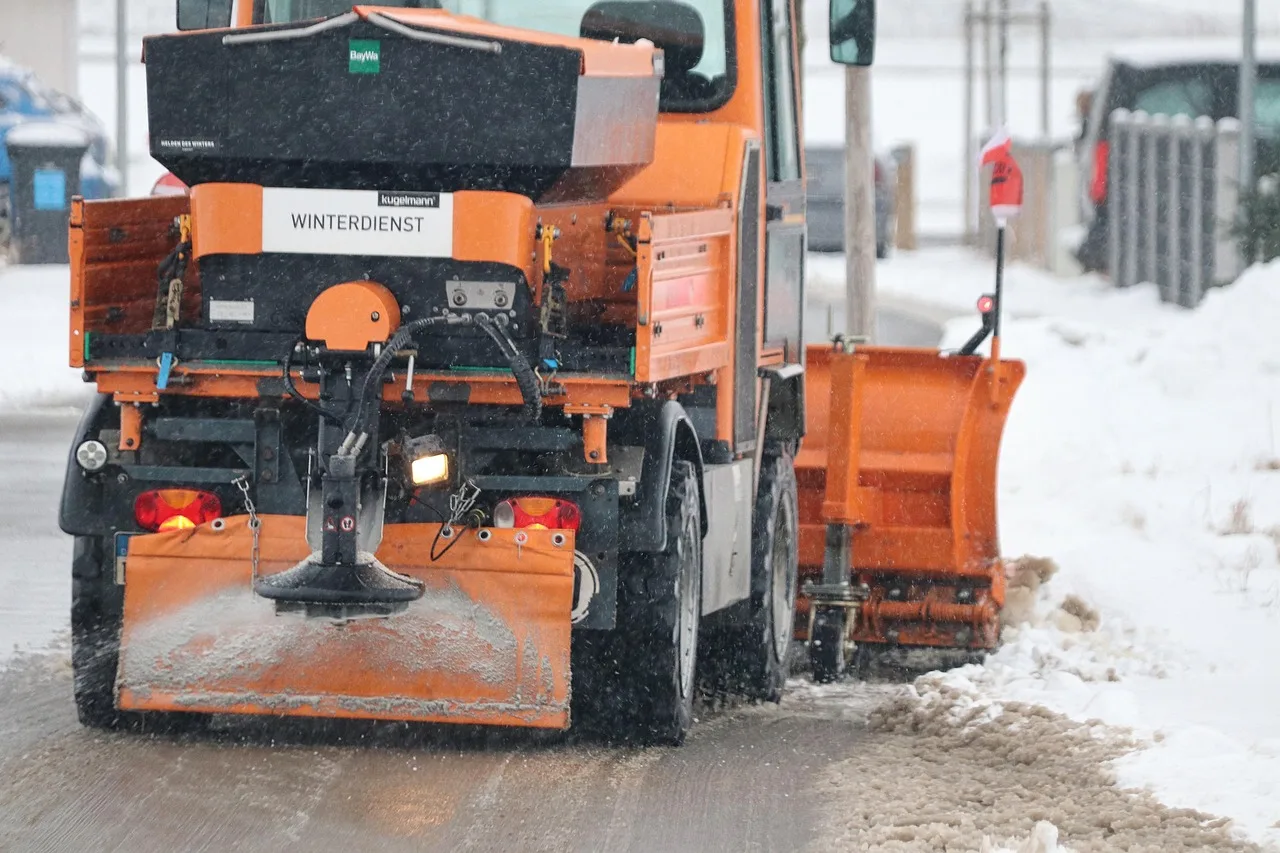
Snow clearing is the largest recurring winter cost in most Prairie portfolios, and the easiest line to mismanage, because the trigger is weather rather than a calendar date.
Winnipeg snow clearing dispatch order
- Trigger at contract accumulation depth or freezing rain forecast
- Dispatch building entrances and fire exits first
- Clear walkways second
- Clear parking stalls third
- Haul snow last
- Photograph before and after with timestamp
- Log start and finish times per address
Winnipeg snow clearing procedure
Winnipeg clears residential streets after main routes. A contractor who waits for the city will always be late, so set your own trigger.
- Trigger the route at the accumulation depth written into the contract, or when freezing rain is forecast.
- Dispatch in priority orderbuilding entrances and fire exits, then walkways, then parking stalls, then hauling.
- Photograph each property before and after with a timestamp, and attach both to the work order.
- Log start and finish times per address, even on a flat seasonal rate.
- File the day's tickets before the office closes, so a tenant complaint meets a record instead of a blank.
Freeze-thaw swings make ice control a separate line item. Trigger sanding and salting by temperature, not by complaint. A slip claim costs more than a salt run. A typical salt and sand run on a small Winnipeg lot bills $150 to $300 per visit, and after-hours ice control carries a premium on top.
Contractor coordination across the Prairies
Saskatoon draws on a smaller contractor pool than Winnipeg, so book capacity in September. Ask each contractor for a written maximum site count and a named backup unit.
Some Saskatoon properties sit on streets where parking bans apply during clearing. Tell tenants in writing where to move vehicles and keep a copy of that notice.
Tie every winter contractor to a repair vendor checklist. Insurance certificates, equipment lists and after-hours numbers get verified before the first snowfall, not during it.
Scheduling the winter calendar
One table for the whole portfolio, kept in the same system as your work orders. A spreadsheet on one manager's laptop is a single point of failure, not a schedule.
| Site | City | Trigger | Contractor | Backup | Record filed |
|---|---|---|---|---|---|
| 12-unit walk-up | Winnipeg | 5 cm accumulation | A | B | Same day |
| 40-unit mid-rise | Saskatoon | 5 cm or freezing rain | C | D | Same day |
| 8-unit row | St. John's | Any freezing rain | E | F | Next morning |
The trigger depth is a contract term, not a city standard. A typical Saskatoon contract sets 5 cm for walkways and a higher depth, often 10 cm, for parking and hauling. St. John's contracts more often trigger on freezing rain, with snow depth as a backup, because rain on frozen ground turns to ice faster than snow settles.
Heating failure response procedures for Winnipeg and Saskatoon
A heating failure in January is an emergency, not a repair request. The first thirty minutes decide whether a tenant stays warm or files with a tribunal.
Saskatoon heating failure steps
The sequence below assumes a cold snap and a booked contractor. It keeps the unit habitable while the repair is arranged.
Saskatoon heating failure response
- Answer call, confirm address and heat status
- Log emergency work order, dispatch within two hours
- If repair runs past four hours, deliver portable heaters
- Offer hotel or rent abatement if unsafe
- Confirm repair to tenant in writing
- File invoice, dispatch log and notice together
- Log the report time, the address and what the tenant seesno heat, weak heat or a cold radiator.
- Dispatch the HVAC contractor and text the tenant the contractor name and the arrival window.
- Count the two-hour dispatch target from the report time, not from the approval time.
- Send portable heaters if the repair will pass four hours, and get a signature for them.
- Record the failed part, the part installed and whether a second trade is needed.
- Close the file with the abatement decision, the invoice and the tenant's written acknowledgement.
Neither Saskatchewan nor Newfoundland and Labrador sets an hour count for restoring heat. The duty is a habitable unit, and the Office of Residential Tenancies decides on the facts. Write the two-hour and four-hour targets into the maintenance plan as your own standard.
Winnipeg runs the same steps with one addition. Boiler and make-up air failures in older apartment blocks usually need a second trade, so keep a plumber and an electrician on the same call list as the HVAC contractor.
This is where a repairs and maintenance guide earns its place. Response times set by trade stop managers from improvising at minus 30.
Freeze-up repair work orders and documentation
Freeze-up damage is slow, expensive and invisible until a ceiling stains. It also produces the largest winter invoices: pipe replacement, drywall, flooring, and occasionally a tenant relocation.
Winter work order required fields
- Property address and unit number
- Reported date, time and channel
- Emergency classification and response target
- Contractor assigned and dispatch time
- Arrival time and work performed
A freeze-up repair that needs pipe replacement, drywall and a drying crew typically bills $4,000 to $15,000 per unit. How many units are wet, how long drying runs and whether the tenant moves out decide where in that range the invoice lands.
St. John's freeze-up repair process
Wind-driven rain, salt air and rapid freeze-thaw mean water enters St. John's buildings where Prairie buildings rarely leak.
St. John's freeze-up repair process
- Treat burst pipe as emergency, shut off supply
- Photograph damage before removal
- Extract water and start drying within 24 hours
- Open separate work orders for repair and restoration
- Notify insurer with photos and drying log
- Re-inspect same location after next freeze
- Shut off the water at the main or the zone valve, and log the time.
- Photograph the water, the damaged surface and the valve before anything is moved.
- Book the plumber and the restoration firm on the same call.
- Start drying inside 24 hours and log a moisture reading at setup and daily after.
- Give the insurer the loss the same day and file the claim number with the work order.
- Re-inspect after the thaw and after the next freeze, and photograph the same spots.
Newfoundland and Labrador's Residential Tenancies Act, 2018 sets the same repair duty, and the province's Residential Tenancies Section administers it. No hour count applies to a freeze-up repair, so the 24-hour drying start is your own standard.
Exterior work in St. John's goes beyond snow: ice damming on low-slope roofs, drifted snow against vents, frozen exterior drains. Give each its own work-order type.
Work-order scheduling template
A winter work order needs the fields a claim or a hearing will ask for. Use the same fields in every city.
- Property address and unit number
- Reported date, time and channel
- Emergency classification and response target
- Contractor assigned and dispatch time
- Arrival time, work performed and parts used
- Photos, tenant notice and abatement granted
- Invoice, approval and filing date
To keep winter emergencies from sitting behind routine work, learn how to schedule property management units.
St. John's weather variables and vendor planning
St. John's has a storm season rather than a snow season. Wind, rain, fog and freeze-thaw arrive in combinations Prairie managers never plan for, which changes vendor planning.
One snow contractor is rarely enough. You need a snow crew, an ice-control supplier, a roofer for ice damming, a plumber for frozen lines and a restoration firm on retainer. Book them in the fall. By December the good firms are committed.
Wind, rain and power outages
Wind-driven rain pushes water through cladding, windows and vents. After a storm, inspect the same known weak points and log what you find, even when nothing failed.
A power outage is a heating failure by another name. The furnace stops, and the pipes follow within hours. Keep a generator plan and a list of buildings where the risk is highest.
Salt air and exterior maintenance
Salt air corrodes railings, stair treads and exterior metal. Schedule an exterior inspection after the last freeze and record the condition of each item.
Plan that exterior work in the same system as the winter work orders, so one address carries one continuous history.
Seasonal checklist for work-order scheduling and records
Use this checklist to close out each winter and prepare the next. It works for one building or a portfolio spread across the region.
Seasonal winter close-out checklist
- Confirm snow contracts, triggers and backups before October
- Verify insurance, equipment and after-hours numbers
- Load work-order template with required fields
- Test on-call rotation and emergency dispatch list
- Issue tenant notices on parking bans and heat loss
- Run pre-winter inspection of heating and fire exits
- Review last winter's freeze-up files for repeat causes
Winter work order queue rules
Winter work arrives faster than routine work, so the queue needs a rule everyone follows.
Winter work order queue rules
- Classify every request as emergency, urgent or routine
- Dispatch emergencies immediately
- Set same-day target for urgent work
- Hold routine work until emergency queue clears
- Review queue every morning through winter
- Close work order only when record is complete
- Classify at intake and sort by risk, not by report time. No heat, no water and a blocked fire exit are emergencies.
- Give each emergency a named owner. The file stays with that person until it closes.
- Dispatch to the contract holder, log the dispatch time, and move to the named backup on the same call if the contractor cannot give an arrival window.
- Hold routine work during a cold snap and log the hold. A dripping tap does not sit ahead of a no-heat call.
- Review open emergencies at the start and end of every shift, and record the review.
- Close the work order within 48 hours of the repair, with photos, the invoice and the tenant notice in the same folder.
Records that survive an audit
A file should answer four questions: what happened, when, who fixed it, and what it cost. If it cannot answer all four, it is not finished.
Keep one folder per property and one work order per event. Photographs belong with the work order, not in a phone gallery. Invoices belong with the approval, not in a separate accounting pile.
A heating work order needs the tenant's call time, the dispatch time, the arrival time, the repair description and the tenant's written acknowledgement. If the unit is vacated during repairs, record the abatement granted and the reason.
Provincial rules and the model codes both expect a habitable unit, and your file is the evidence you acted.
Freeze-up files are read by insurers and tribunals, so they carry more than a routine work order. Keep the original report, dispatch record, photos, drying log, invoice and tenant communication together.
Hold routine winter work orders three years and freeze-up and heating failure files six years. That is typical practice, not a rule.
Insurers want records covering the policy period plus the limitation period for a property damage claim, and that period is two years in both Saskatchewan and Newfoundland and Labrador. Confirm the number with your broker, because a claim can surface a year after the thaw.
The same records control cost. A team that tracks repeat freeze-ups at one address can fix the cause, which is the cheapest way to lower repair costs across several winters.
Common questions
What triggers snow clearing in Winnipeg?
Use the accumulation depth in your contract, not the city's plowing schedule. Residential streets are cleared after main routes, so waiting for the city leaves entrances and walkways late.
How fast must a Saskatoon landlord restore heat?
There is no single number in the statute. The practical target is dispatch within two hours and a habitable unit within four, with portable heaters delivered and recorded if the repair runs longer. Confirm your own obligations with a licensed paralegal, since the Residential Tenancies Act sets repair duties and the Office of Residential Tenancies hears disputes.
What is different about freeze-up repairs in St. John's?
Wind-driven rain and freeze-thaw cause water entry and ice damming that Prairie buildings rarely see. Plan for a roofer and a restoration firm, not just a plumber.
What should a winter work order contain?
Report time and emergency classification. Contractor and dispatch time. Arrival time and work performed. Photos and the invoice. One file, one event.
How long should winter records be kept?
Three years for routine winter work orders and six years for freeze-up and heating files. That is typical practice, not a legal rule: it covers the policy period plus the two year limitation period for a property damage claim. Confirm it with your broker.